
Scientific Journal
Document Type : Research Paper
Authors
1 M.A. in Indian Studies, University of Tehran, Tehran, Iran
2 Associate Professor of East & South Asia and Oceania Studies, University of Tehran, Tehran, Iran
Keywords

This is an open access work published under the terms of the Creative Commons Attribution-ShareAlike 4.0 International License (CC BY-SA 4.0), which allows reusers to distribute, remix, adapt, and build upon the material in any medium or format, so long as attribution is given to the creator. The license allows for commercial use (https://creativecommons.org/ licenses/by-sa/4.0/)
1. Introduction
The X platform (previously Twitter) is an online platform whereby political figures build and present their persona. In the UK, this platform has also been a site of negotiating multicultural identity, with South Asian-origin politicians like Rishi Sunak holding prominent positions in recent years.
Sunak, born in the UK to East African Indian parents, transitioned from Chancellor's Exchequer to Prime Minister (2022–2024), then Opposition Leader and onto the backbenches as an MP in early 2025. As a public figure navigating British conservativism and Indian heritage, Sunak provides a strong case for the examination of how hybrid cultural identity is performed online.
This article is going to analyse the tone and the context of Rishi Sunak’s tweets before, during and after his entitlement as the Prime Minister of UK, which relate to themes of cultural identity, hybridity, multiculturalism, meritocracy, and neoliberal values, while having his Indian heritage in mind. By putting these important periods into comparisons with each other, we may notice recurrences of themes within the Tweets, which relate to his political positioning, bias and agenda.
This research is particularly concerned with the ways in which Sunak deploys his ethnicity within UK debates around diversity, meritocracy, and social mobility, to either reinforce or disrupt the stereotype of a multi-national leader through his Tweets on X platform. The project will examine the two-dimensional interaction between identity on the X platform and identity as perceived by the general public, exploring whether his digitally constructed persona obscures or conforms to prevailing expectations of politicians from mixed-nationality backgrounds, and how this dynamic affects his acquisition or loss of political legitimacy. It will further explore the role of X as a new and potent communication weapon in political campaigns.
Following this, a literature review situates the study within interdisciplinary debates on political communication, postcolonial theory, and digital identity, drawing from key thinkers of these fields between the East and the West. The paper then elaborates its theoretical framework, centring Hall’s theory of representation, while integrating supporting concepts such as cultural identity, hybridity, multiculturalism, meritocracy, and neoliberalism to understand the layered meanings behind Sunak’s digital persona. The methodology section details a qualitative thematic content analysis of Sunak’s tweets, using keyword-based sampling to isolate posts related to cultural signifiers and political messaging across different phases of his career. The findings are presented thematically in relation to how cultural identity is referenced. Further, the analysis explores how Sunak’s digital presence is carefully managed, emphasizing visual symbolism and emotional appeal, while avoiding controversial subjects such as colonial legacy or structural inequality—thereby revealing a politics of controlled visibility. The discussion section interprets these patterns as indicative of a strategic self-representation that affirms dominant narratives of Britishness and inclusion without challenging hegemonic power structures.
Finally, the article concludes by reflecting on the implications of Sunak’s case for understanding elite minority representation in the digital age and suggests directions for future comparative and audience-focused research in digital political identity.
1. 1. Research Questions
This research addresses the following questions:
Major Question: How did Rishi Sunak represent his Indian origins on his official X(former Twitter) account before, during and after his premiership within the UK government between 2020-2025?
Minor Question: How significant was platform governance in shaping this curated identity?
1. 2. Literature Review
In postcolonial studies, authors such as Fanon (1952) have demonstrated how representation, particularly public and political ones, is bound to be a symptom of deeper conflict over power, visibility, and belonging. For Fanon, the image of the colonized subject within the structures of the colonizer is never neutral; it is mediated through histories of racialization, subordination, and resistance. Representation, then, is not simply about presence, but about the terms under which that presence becomes intelligible or legitimate within a dominant framework. This research does not investigate colonial history per se, but it does recognize that Sunak's entry as a British politician of Indian origin has symbolic significance.
Tweets are in fact part of an extended discourse around diversity and identity in digitally-curated public life. His visibility operates in relation to the long history Fanon describes, in which non-white figures in positions of power can signal both the persistence of racial hierarchies and their potential contestation. Tweets are in fact part of an extended discourse around diversity and identity in public life, making Sunak’s image a site where questions of inclusion, tokenism, and belonging are played out in real time.
Hall’s (1997) representation theory assigns meaning to a socially constructed form, composed of signs, images, and language in specific socio-historical contexts. Representation is therefore not a neutral reflection, but where there is positive construction of political identities. Hall’s work is foundational for understanding how identities are not fixed, but are continually produced and negotiated through discourse. In the digital age, this process is amplified by the immediacy and reach of social media, where politicians like Sunak can craft and disseminate their narratives to global audiences in real-time.
Bhabha's (1994) theory of hybridity extends this concept and brings it into postcolonial ground, the ‘third space,’ where cultural identities converge and form new constructions transgressing binary oppositions like colonizer/colonized or East/West. Hybridity in this sense is employed with tweets placing British and Indian cultural milestones side by side in image, word, or diplomatic arrangement. Bhabha’s framework is particularly apt for analysing Sunak’s tweets, which often juxtapose British and Indian cultural symbols, such as Diwali celebrations alongside references to UK economic policy, to project a seamless hybrid identity. However, this performance is not neutral; it is shaped by power dynamics that privilege certain narratives while marginalizing others, such as critiques of colonialism or structural inequality.
Multiculturalism, as described by Kymlicka (1996) and Modood (2007), offers political recognition of greater than one cultural tradition within a state. Yet, according to certain critics, it is argued that it can be seen as symbolic inclusion, but not one that creates solutions to the system imbalances. In this interpretation, multiculturalism is coded because Sunak indulges in diversity or speaks of Britain as a plural nation without structural critique. This selective visibility aligns with what scholars have termed “ceremonial multiculturalism”, where cultural recognition is depoliticized and divorced from material change.
Young's (1958) and Harvey's (2005) critiques on meritocracy and neoliberalism show the way discourses involving ‘opportunity’ and ‘hard work’ mask privilege on a systemic scale. Meritocracy in this study takes place in tweets when tales of success of individuals or families are advanced as evidence of social mobility, and neoliberalism in tweets where market-driven solutions, entrepreneurship, and minimal state intervention are emphasized.
Napoli (2019) and Gillespie (2020) describe how algorithmic curation, content moderation, and fact-checking features such as Community Notes determine what is disclosed or concealed. Gorwa (2024) emphasizes that platform regulation goes beyond technical rules and reflects broader political struggles. According to Gorwa, decisions around content moderation are deeply embedded in power relations between states, platforms, and users. This framework helps explain changes on X after Elon Musk’s acquisition in 2022, where shifts in moderation and governance have reshaped which political messages are amplified or suppressed.
Empirical research following the acquisition supports this view (Hickey et al., 2023; Auten & Matta, 2024; Quadir, 2024).
Hickey et al. (2023) document a notable rise in hate speech and bot activity, indicating that altered moderation policies have impacted the platform’s content environment. Similarly, Auten and Matta (2024) link the loosening of moderation controls to increased political abuse, while a study discussed by Quadir (2024) finds that such abuse is widespread and crosses partisan lines. In addition to these perspectives, Couldry and Mejias (2019) describe this process as “data colonialism”, where the extraction and commodification of human data echo historical patterns of colonial exploitation (Couldry & Mejias, 2019) Within this framework, platforms such as X do not simply act as neutral spaces for political communication, but participate in a global system of knowledge production and visibility control that privileges certain actors and narratives over others. When combined with the selective amplification and suppression documented by studies of post-Musk platform governance, such practices can be read as ,a form of algorithmic colonialism, where technological infrastructures extend the reach of colonial logics into the digital sphere, shaping which political identities can be seen, celebrated, or silenced.
1. 3. Theoretical Framework: Hall’s Representation Theory
This research primarily uses Stuart Hall's theory of Representation, through which Rishi Sunak's public tweets will be analysed. Representation, according to Hall (1997), is the way meaning is made and circulated through signs, images, and language within a particular culture. Representation does not represent reality, but a constitutive act: words do not reflect meaning, but create it. For Hall, meaning is not pre-supposed, but always situated, generated in a specific historical, social, and political context through discourse (Hall, 1997).
The role of celebrities and influencers play in shaping public taste and opinion is undeniable. This influence, however, places a new responsibility upon them: they must not only understand how their digital identity is perceived, but also master the art of crafting an appealing online persona to sustain and expand their reach. This theoretical model is particularly apt to political leaders who perform public narratives through calculated communication such as tweets. Hall's theory enables us to observe how Rishi Sunak's tweets on X (formerly Twitter) serve as a site of meaning-production.
Instead of mistaking Sunak's digital identity with his personal identity, this paper only limits itself to his representations via tweets on X. The question at hand is not who Sunak really “is”, but “how” he performs, and how that performance generates meanings in favour of his political agenda in the wider scope of British politics. Representation in this context is conceived as performative and constructed. Through the analysis of the text and visual attributes of Sunak's tweets, this project is mainly interested in how he constructs and represents his multicultural identity, for example his Indianness—not whether he ‘feels’ Indian or what others think of him.
It should be noted that within this research, Sunak's online self is not his complete or true self, nor is it interested in hypothetical constructions of his internal psychological or individual motivations. Instead, analysis is limited to what is rendered visible and sayable in his public tweets. Here, Hall's theory is used as a foundation alongside other cultural and political studies, concepts that will become the operational themes in the methodology on which the criteria for selecting and discussing the tweets will be based.
1. 4. Key Analytical Concepts:
1. 4. 1. Cultural Identity and Hybridity
Based on Hall (1996), cultural identity is fluid and negotiated, performed through shared values, practices, and symbols. For Sunak, this appears in tweets referencing Indian festivals and heritage. In Bhabha’s (1994) terms, such performances operate in a ‘third space’ of hybridity, where British and Indian cultural signifiers converge, producing a composite public persona.
Multiculturalism, following Kymlicka (1996) and Modood (2007), denotes political recognition of multiple cultural traditions. In this study, tweets invoking Britain as diverse, inclusive, or representative of minority traditions were coded under this theme.
1. 4. 3. Meritocracy & Neoliberalism
Meritocracy is the utopia that excellence is rewarded on merit of talent and effort, rather than social birth. Young (1958) originally used the term in a negative sense, whereas authors such as Brown (2015) and Harvey (2005) point to how neoliberalism makes meritocracy a legitimating myth which masks structural injustices.
As for Neoliberalism, through its invocation of the language of the market, individual initiative, and limited state intervention, it locates political achievement in the context of Sunak's individual experience of personal achievement (elite school, business success) is commensurate with neoliberal ideology and tends to cover up structural privilege.
1. 4. 4. Controlled Visibility
Recent studies on platform governance (Napoli, 2019; Gillespie, 2020) outline the myriad metrics by which social media platforms control content visibility. While interventions like X's Community Notes are now standard, a more efficient model might involve deploying human moderators specifically to counter viral misinformation. In case of the X platform, it is evident that for example the voice of Gaza and Palestine is to some extent ignored, and their tweets could be demonetized, banned or removed for saying they are hungry. Furthermore, the mentioned mechanisms of Controlled Visibility on X are not giving everyone the same opportunity to be heard and seen on the platform. As a result, they have to act based on the algorithms and the content strategy of the platform. In other words, they have to market themselves based on what contributes best to their political campaign, yet calibrate it based on the various platforms.
1. 5. Methodology
This study employs qualitative content analysis to explore how Rishi Sunak performs his Indian cultural identity on his official X account when becoming and serving as a prominent British political leader between 2020 and 2025.
A total of 50 tweets were selected for analysis. In qualitative research, sample adequacy is determined by the point of theoretical saturation rather than statistical representativeness (Rahim Soltani, 1391 [2012 A.D.]). Contemporary studies of political Twitter communication have demonstrated that samples of 40-60 posts typically achieve adequate thematic coverage for focused qualitative analysis (Schreier, 2012; Sloan & Quan-Haase, 2017). This aligns with Rahim Soltani's (1391 [2012 A.D.]) methodological guidance that smaller, carefully selected corpora often yield more analytically productive results, compared to larger but less targeted datasets when examining specific dimensions of political identity. The 50-tweet sample proved particularly appropriate, given the study's concentration on ceremonial multiculturalism and diplomatic performances, where repetition of key symbolic gestures was itself an important analytical focus.
The sample's limitations are acknowledged, particularly regarding potentially excluded minor themes or less frequent forms of identity expression. However, as Rahim Soltani (1391 [2012 A.D., p. 38]) notes in her discussion of content analysis, such bounded samples become methodologically justified when the research questions prioritize depth of analysis over exhaustive coverage. This approach was further validated through systematic reliability checks, including test-retest coding procedures that confirmed the stability of interpretive frameworks across the dataset.
The overall goal is not to measure Sunak's personal beliefs or audience opinions, but to analytically examine how his public tweets strategically build identity and political meaning through language, images, and symbols. The purposive sampling technique was used to choose tweets that best reflect identity, representation, and political discourse themes.
The concepts that were gathered as tools of analysis, will we be operationalized through this methodology. Keywords were gathered related to each theme in order to find tweets that would be the theoretical foundation of this article.
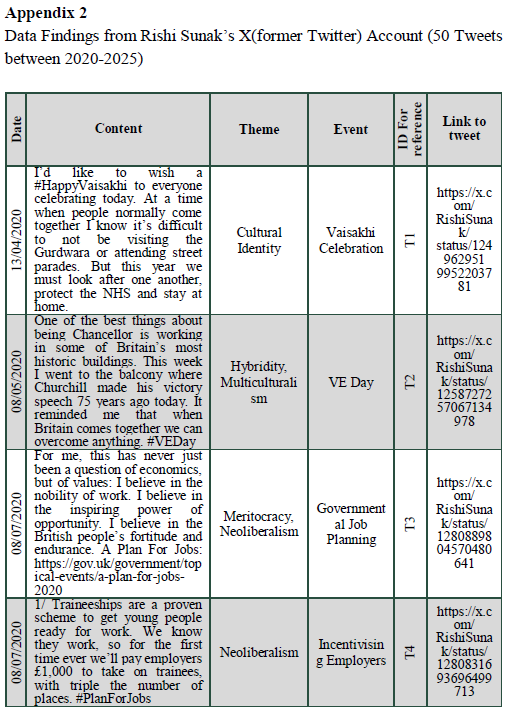
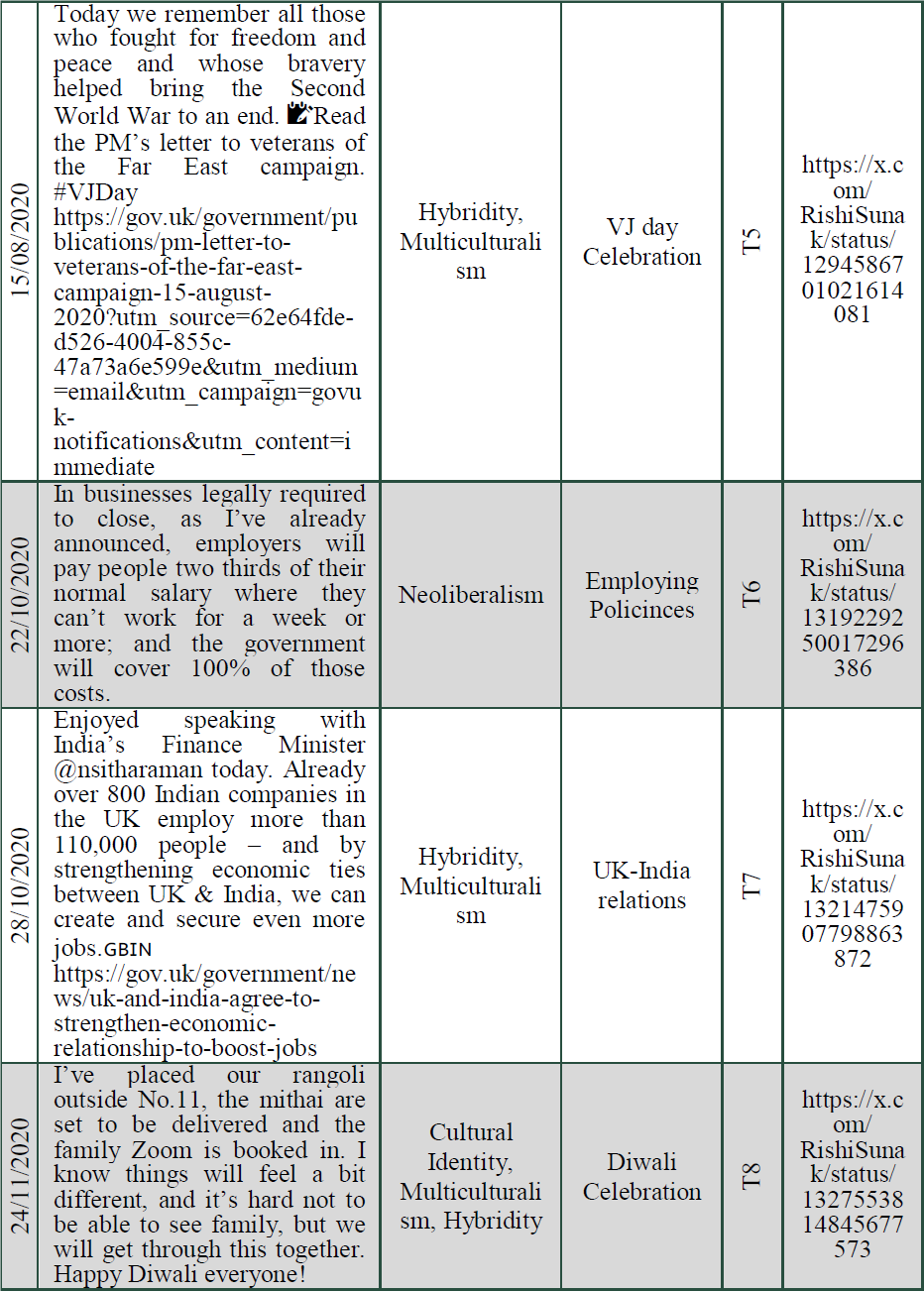
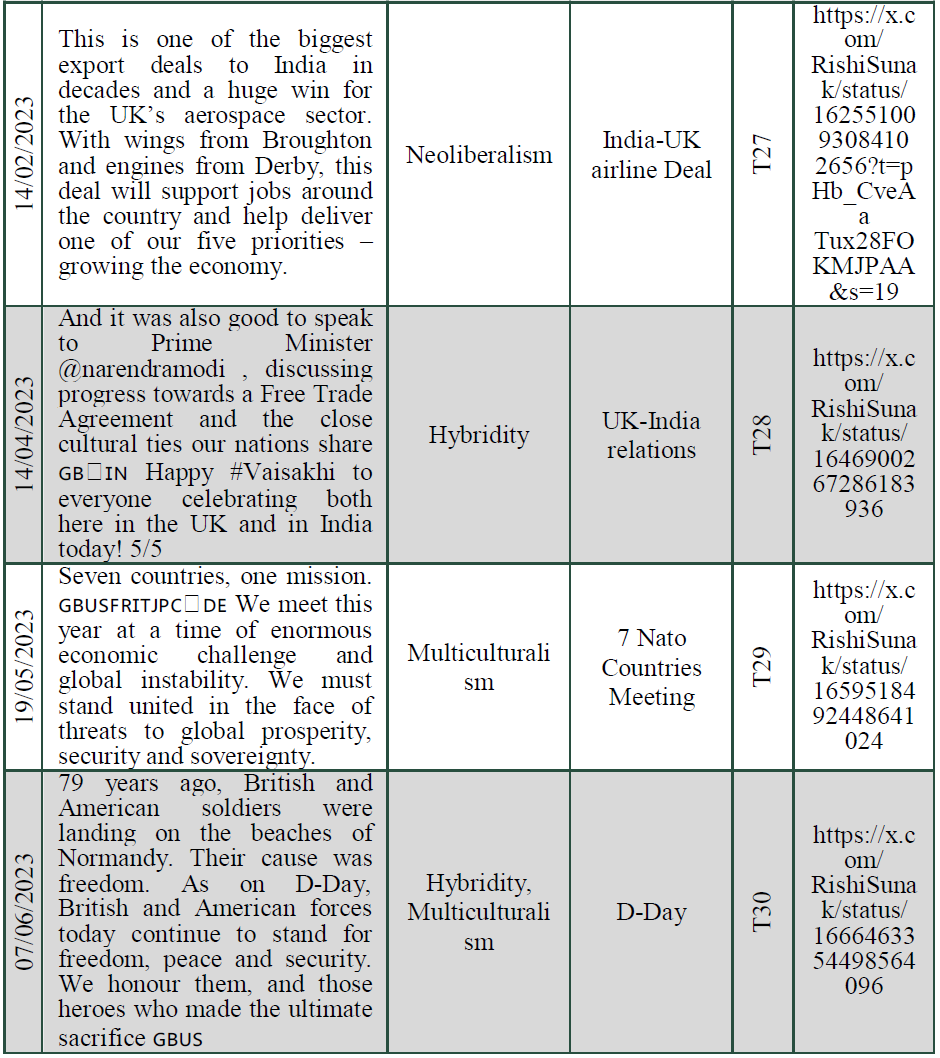
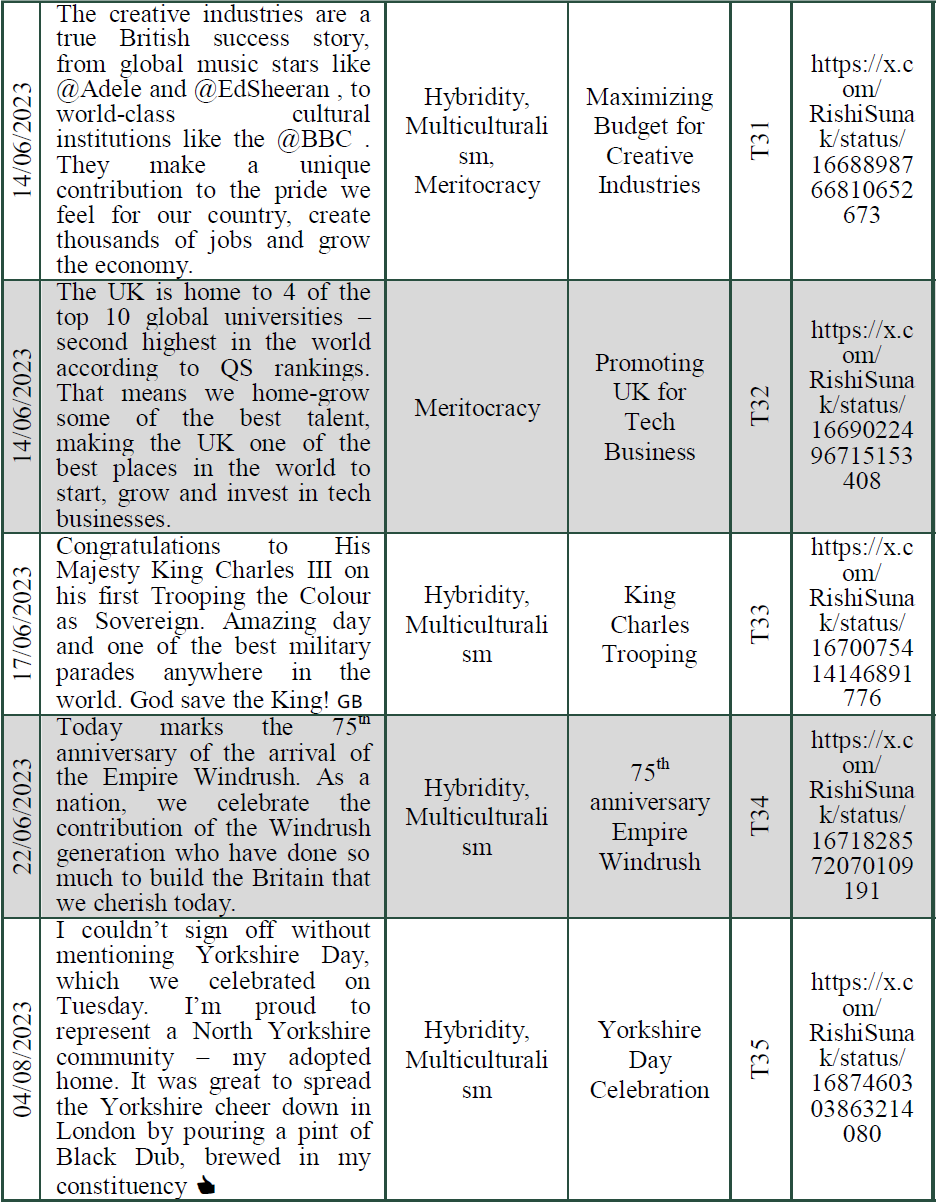
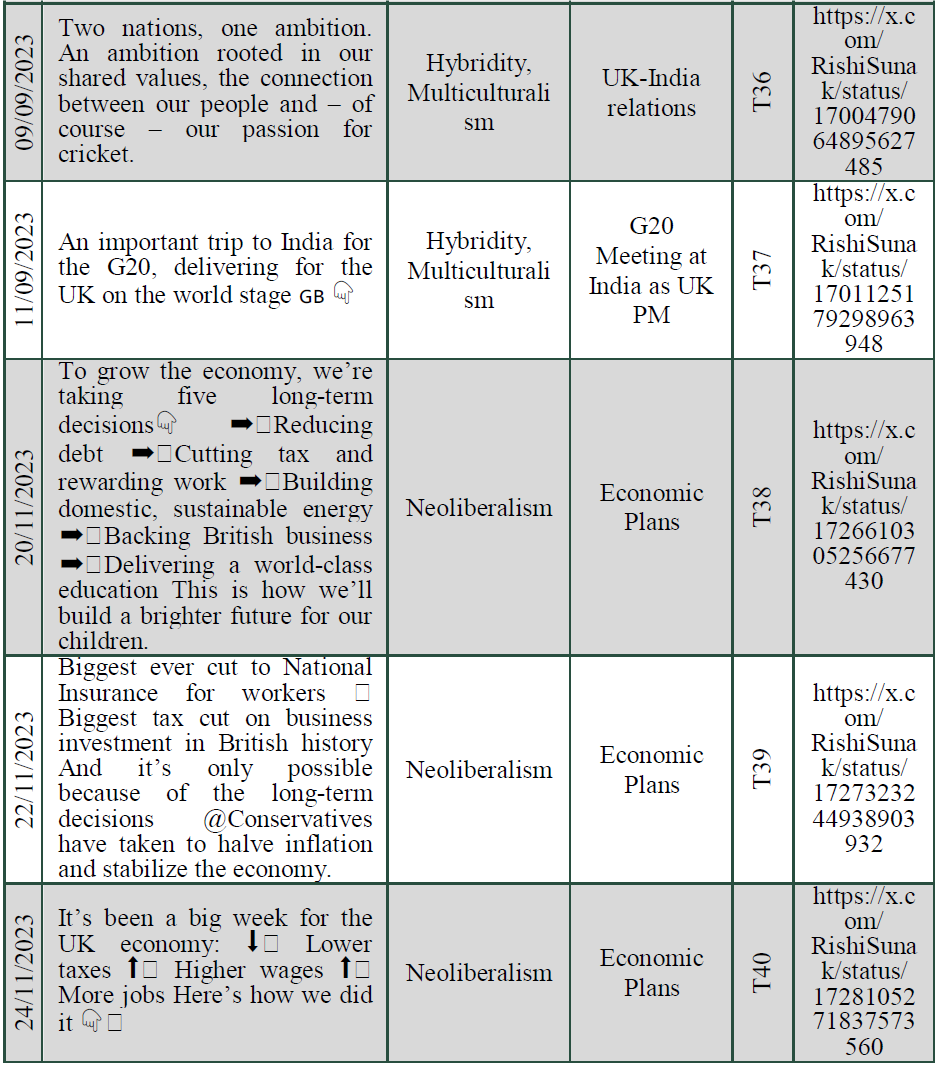
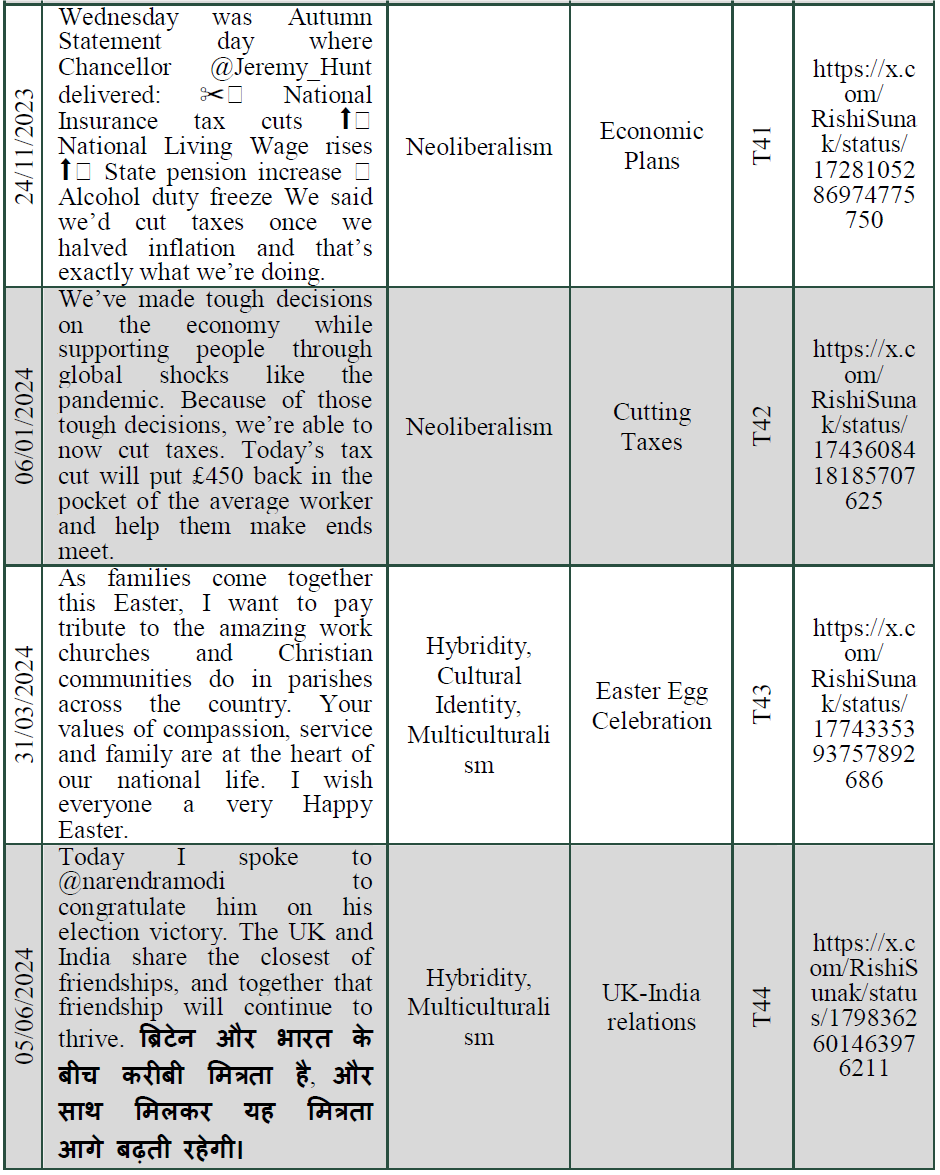
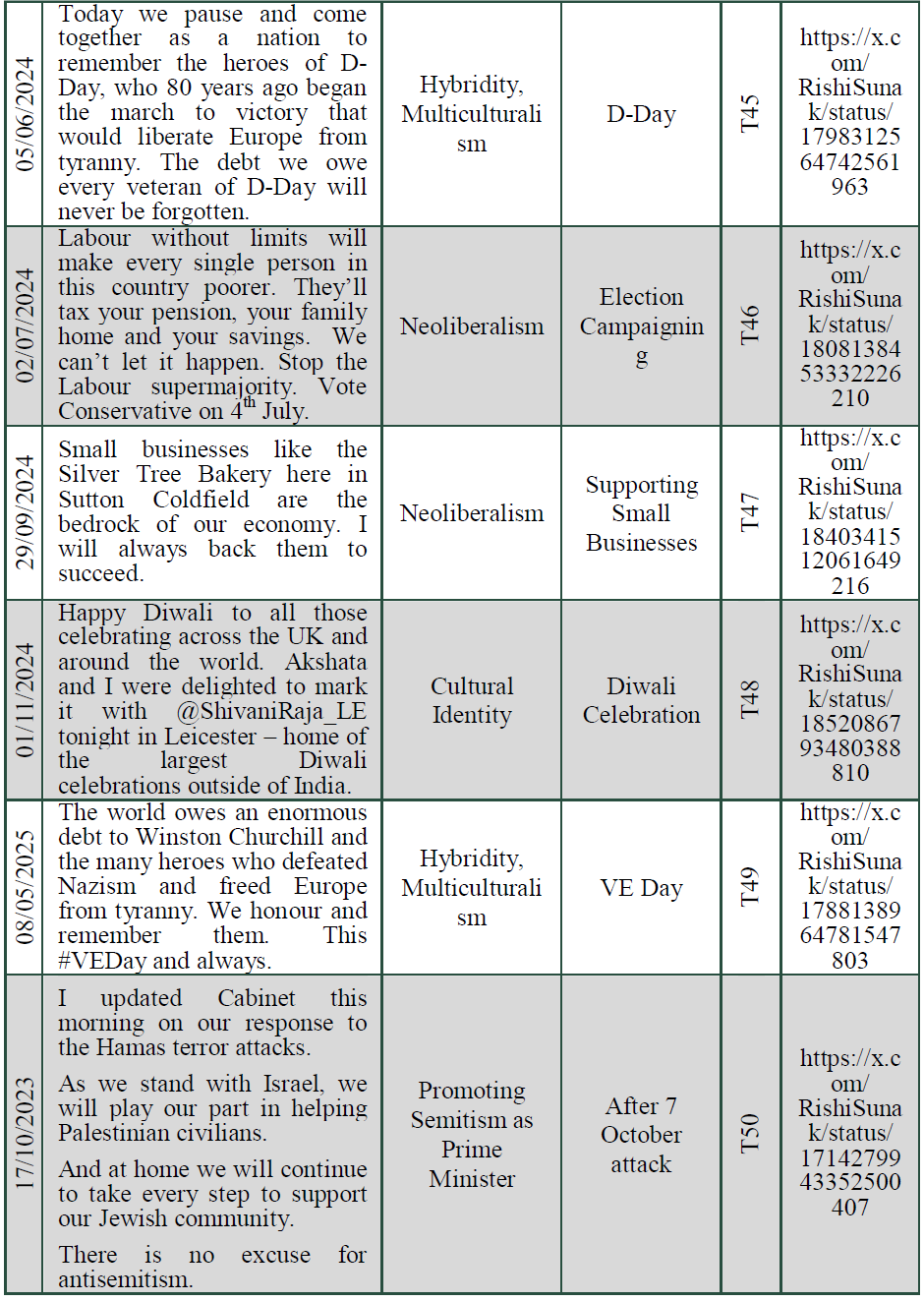
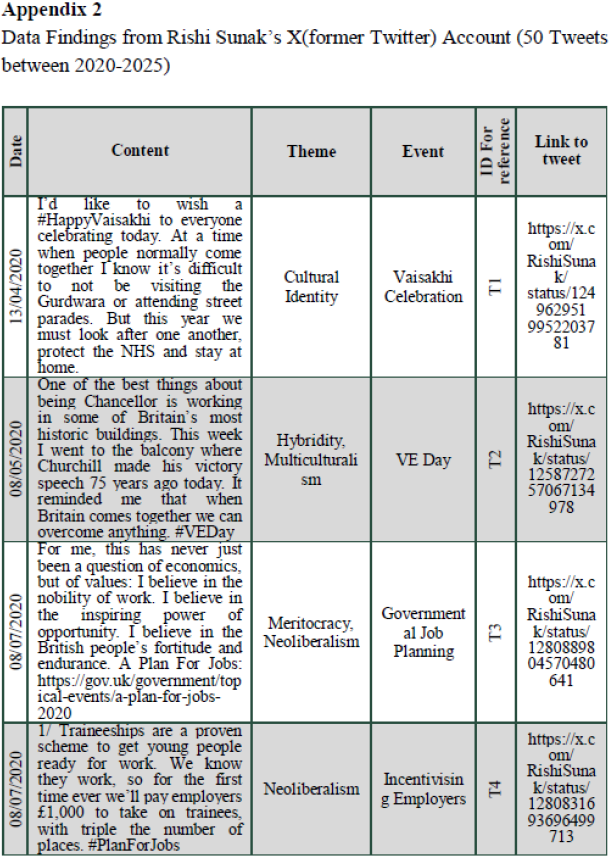
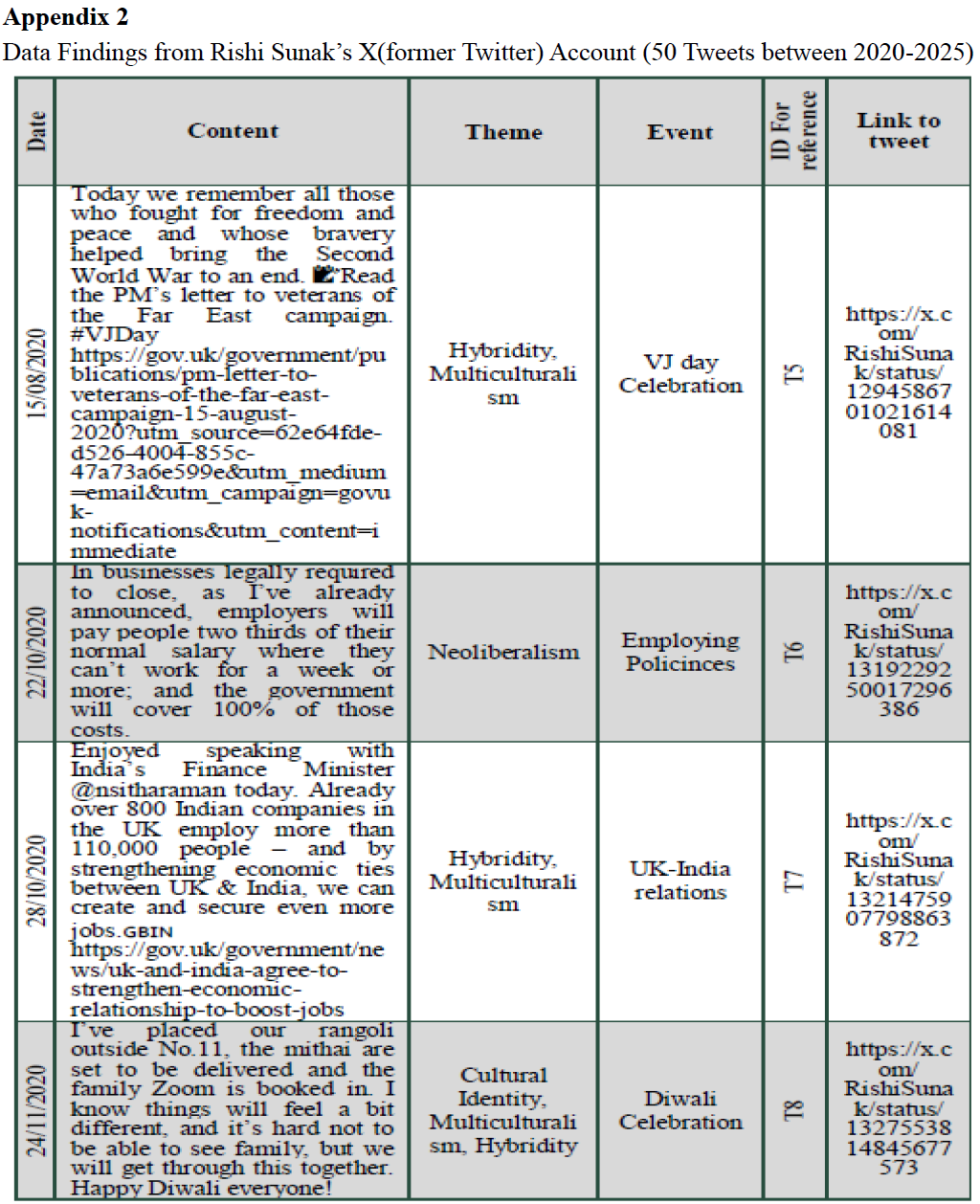
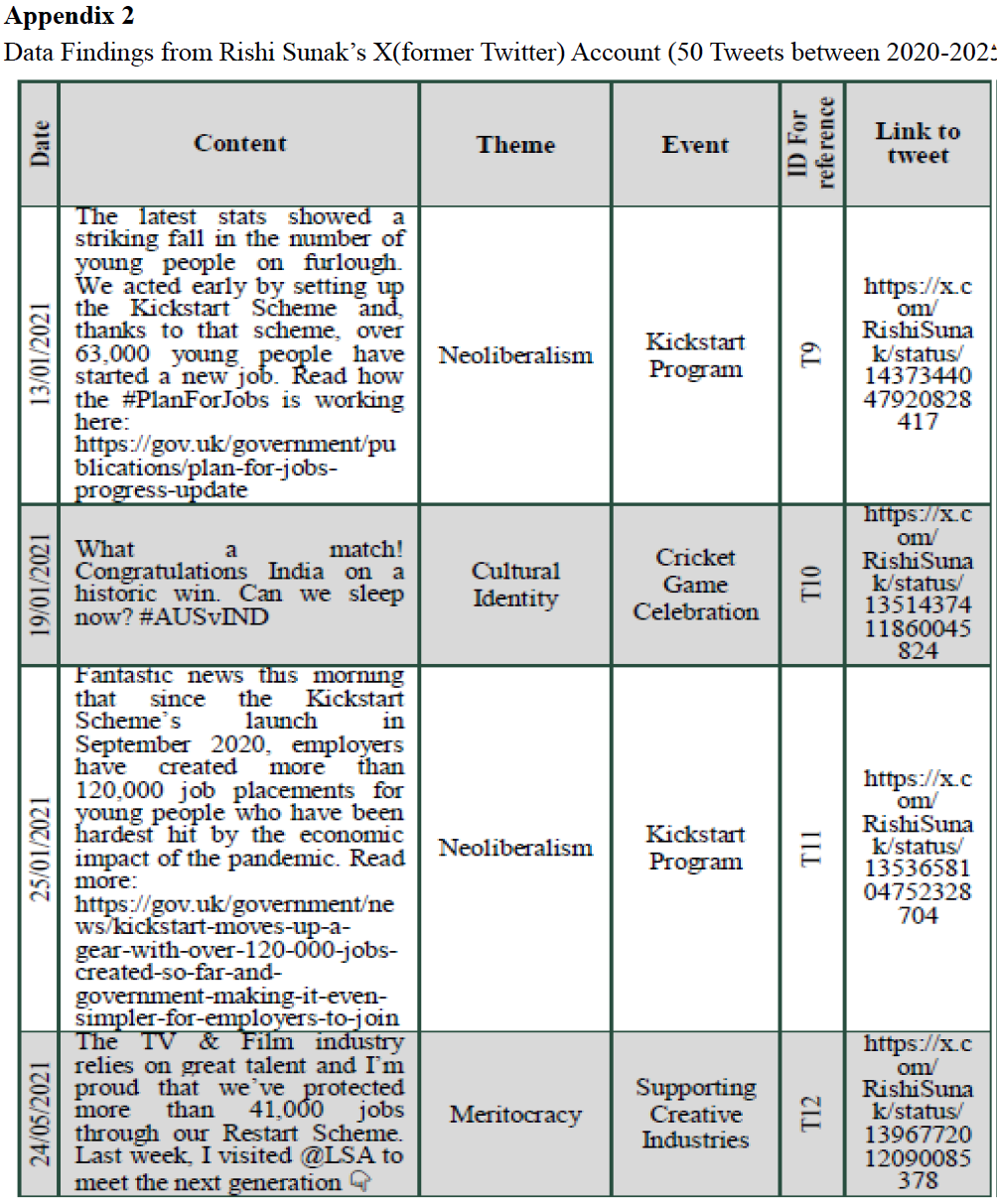
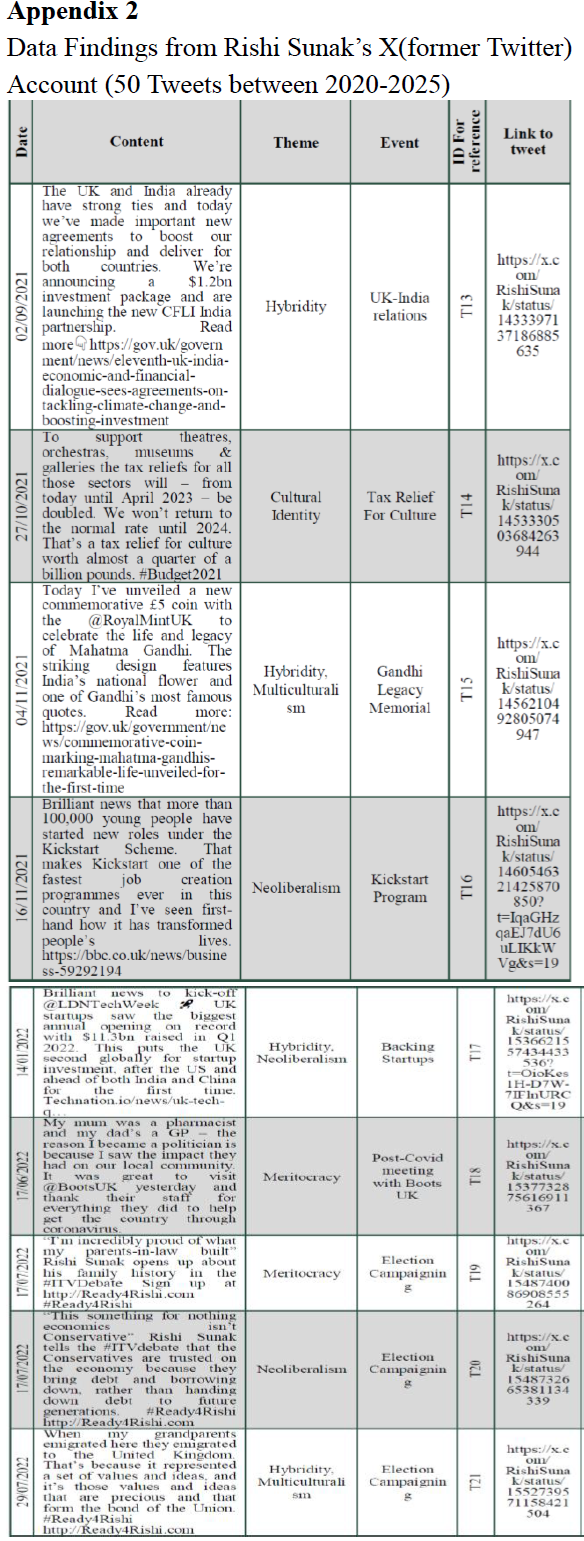
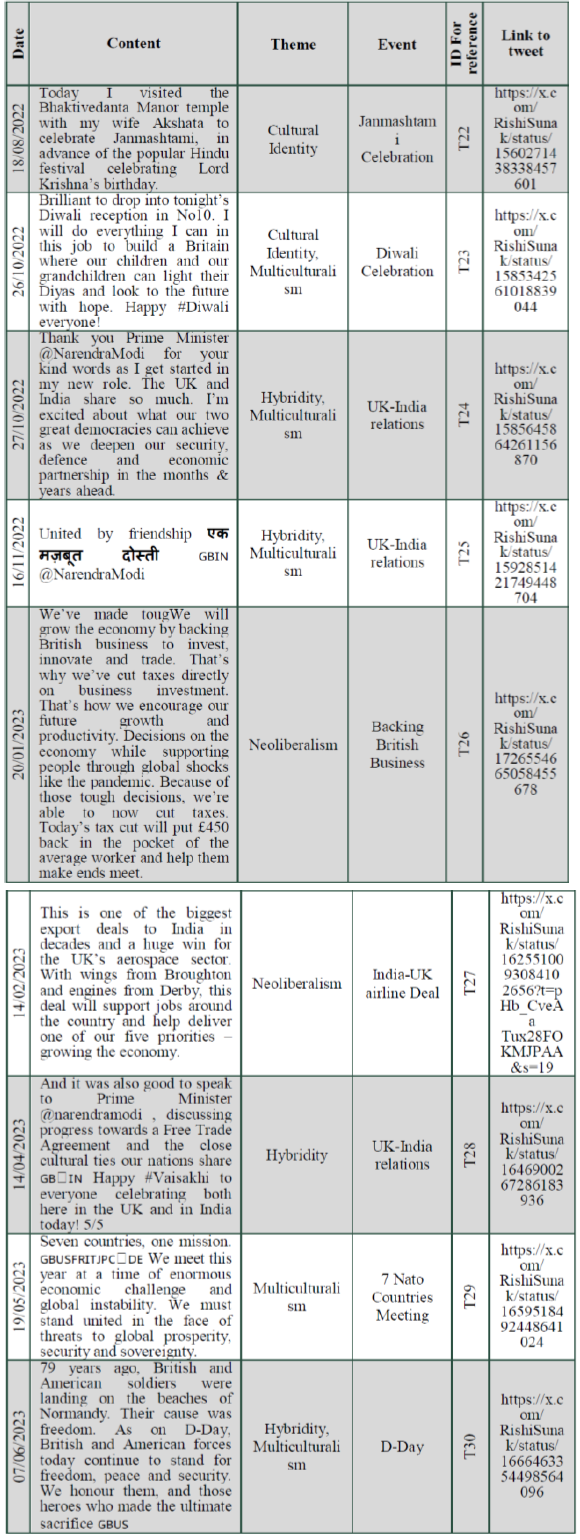
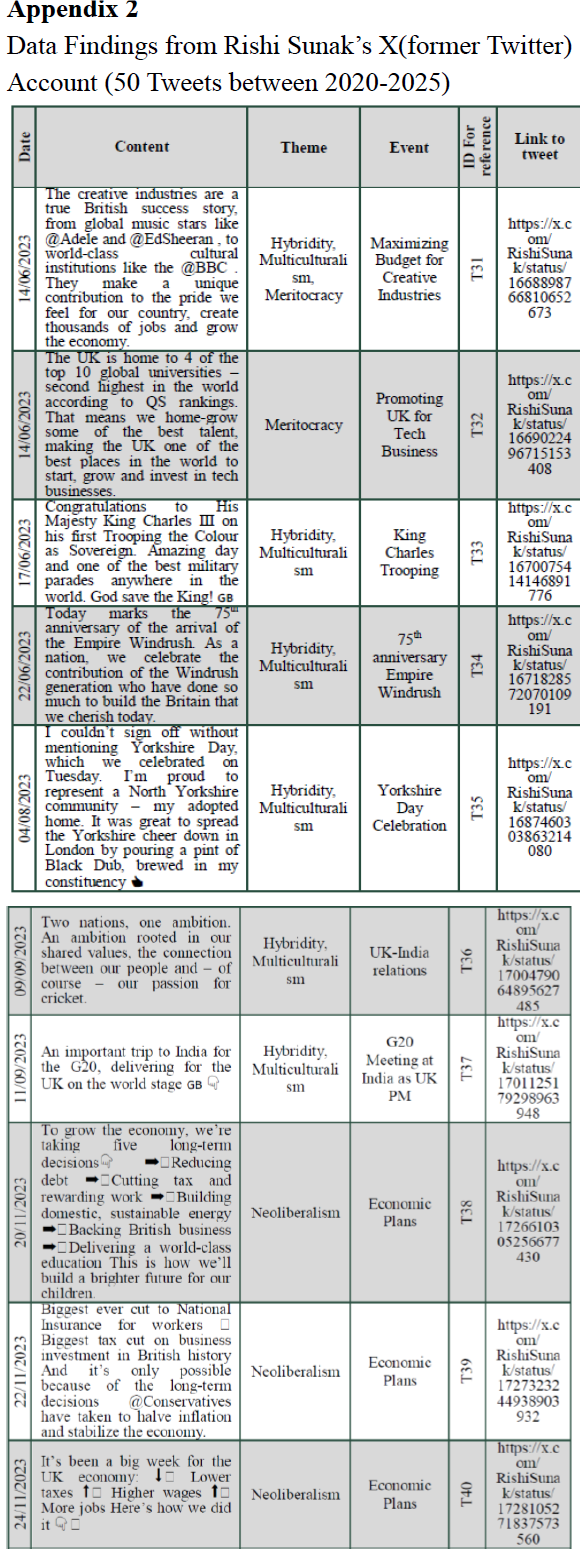
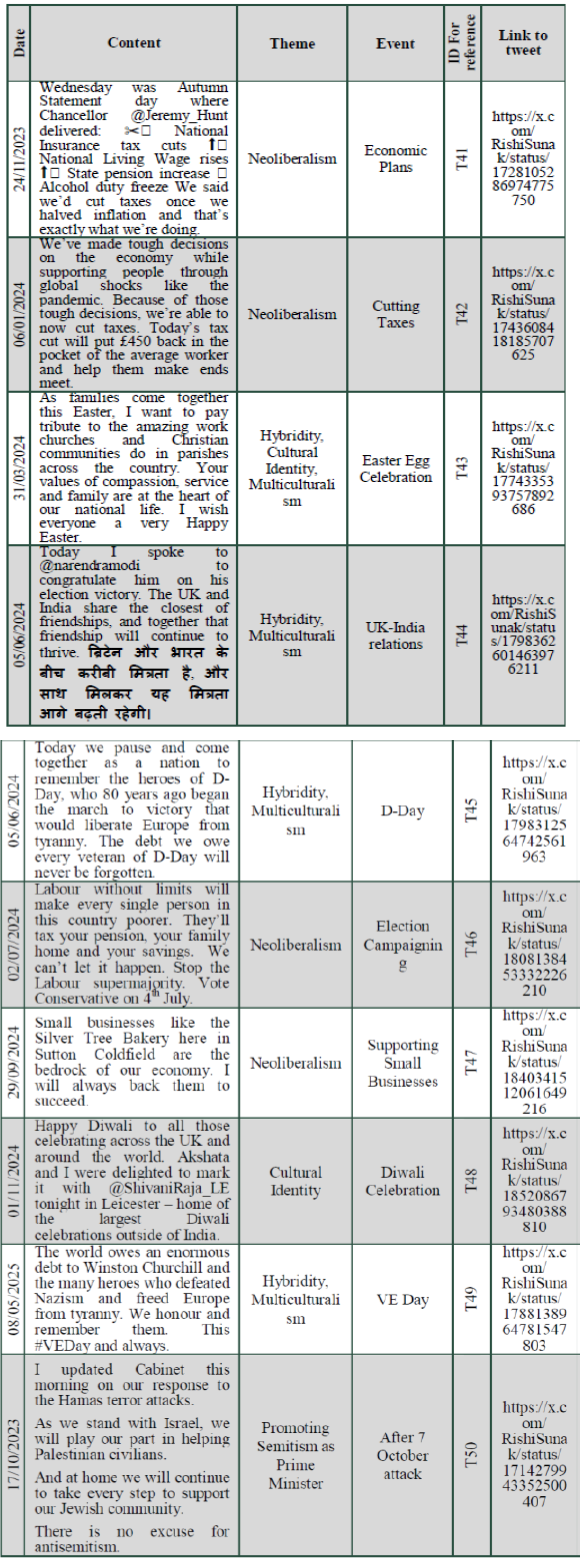
All Tweet data gathered for this work are available at the Appendix 2 of the document.
1. 5. 1. Data Collection
The data for this research is collected from 2020 to 2025: a crucial period in the career of Rishi Sunak—his rise as Chancellor of the Exchequer, his elevation to Prime Minister, and then continuing on to the role of Opposition Leader and at the early 2025 a normal Conservative MP (Member of Parliament) for Richmond and Northallerton.
Keywords were iteratively refined (see Appendix 1) to capture thematic saturation, not just lexical presence:
- Cultural Identity: ‘India’, ‘Hindu’, ‘Indian’, ‘British’, ‘Britain’, ‘The Great Britain’, ‘UK’, ‘Colonialism’
- Multiculturalism: ‘Diversity’, ‘Representation’, ‘Heritage’
- Hybridity: ‘Origins’, ‘Background’, ‘Identity’, ‘Integration’
- Meritocracy: ‘Opportunity’, ‘Success’, ‘Achievement’, ‘Hard Work’, ‘Progress’
- Neoliberalism: ‘Economy’, ‘Growth’, ‘Innovation’, ‘Investment’, ‘Business’
- Controlled Visibility will be discussed differently from these themes, for it is a major factor in platform governance; the findings will be checked based on this concept which relates to platform governance policies.
While keyword filtering ensured thematic relevance, future work could incorporate more sentiment analysis or audience replies to deepen context.
1. 5. 2. Reliability Check: Test-Retest
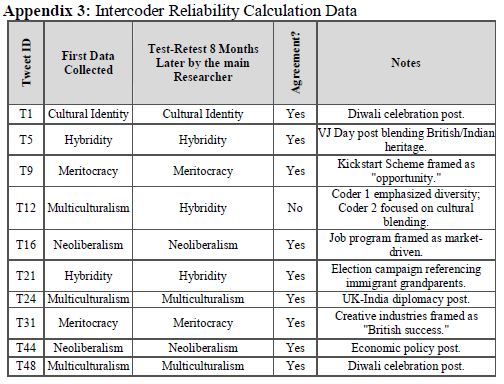
To ensure the consistency and stability of the coding process, this study employed a test-retest reliability assessment, a well-established method for validating qualitative research conducted by a single researcher (Rahim Soltani, 1391 [2012 A.D.]); Neuendorf, 2017). The procedure involved reapplying the original coding framework to a randomly selected subset of 10 tweets (20% of the total sample) after an 8-months interval by the main researcher. This duration was chosen to minimize recall bias while maintaining contextual familiarity with the dataset.
The results demonstrated strong temporal stability in coding decisions, with an 87% agreement rate between the two coding rounds. Discrepancies were limited to theoretically adjacent categories, primarily between Hybridity and Multiculturalism, reflecting the inherent interpretive nature of qualitative analysis. These borderline cases were resolved through systematic consultation of the coding manual and theoretical framework documents.
To quantify reliability, Cohen's kappa coefficient (κ = 0.87) was calculated using SPSS Statistics (version 29.0), indicating near-perfect agreement according to Landis and Koch's (1977) benchmarks. This dual-method approach, combining test-retest reliability with statistical measures, aligns with the best contemporary practices for solo researcher content analysis (Krippendorff, 2018). The complete reliability data, including coding comparisons and resolution protocols, are documented in Appendix 3 for transparency.
This methodological design addresses a key limitation of single-researcher studies by providing empirical evidence of coding consistency over time, while maintaining the study's original analytical framework and findings. The eight-months interval between coding sessions exceeded minimum standards for temporal validation in qualitative research (Neuendorf, 2017), ensuring the reliability assessment without compromising the study's internal validity.
2. Data Findings and Content Analysis
2. 1. Data, Scope, and Reliability Checks
Among nearly 4000+ existing tweets at the time of starting this research, 50 were selected from Rishi Sunak’s official X account (2020–2025) purposively sampled around five themes—cultural identity, hybridity/multiculturalism, meritocracy, and neoliberalism—using the Advanced Search tool on X. A second, time-separated pull with an expanded synonym list produced an 87% overlap, indicating stable retrieval against shifting platform content (account deletions, new posts) and confirming that the keyword frame reliably surfaces the same corpus across time. Posts unique to one pull were manually reviewed and, where appropriate, keyword definitions were refined before finalizing the sample.
Cultural identity surfaced most explicitly in Sunak’s festive greetings and ceremonial posts. Tweets marking Diwali, Vaisakhi, Janmashtami, and Eid became recurrent features across his timeline. These posts were visually rich, often featuring candles, rangoli, traditional attire, or visits to temples. Their appeal rested on a celebratory mode, conveying warmth, inclusivity, and diasporic pride, while avoiding contentious references to the politics of race, colonialism, or inequality.
A second cluster of tweets drew on hybridity, where British and Indian cultural signifiers were blended, particularly in the realm of diplomacy. Tweets announcing UK–India trade deals, commemorating bilateral visits, or highlighting shared passions such as cricket carried symbolic weight. They depicted Sunak’s Indian heritage as a diplomatic bridge, legitimizing him as a natural interlocutor between two nations.
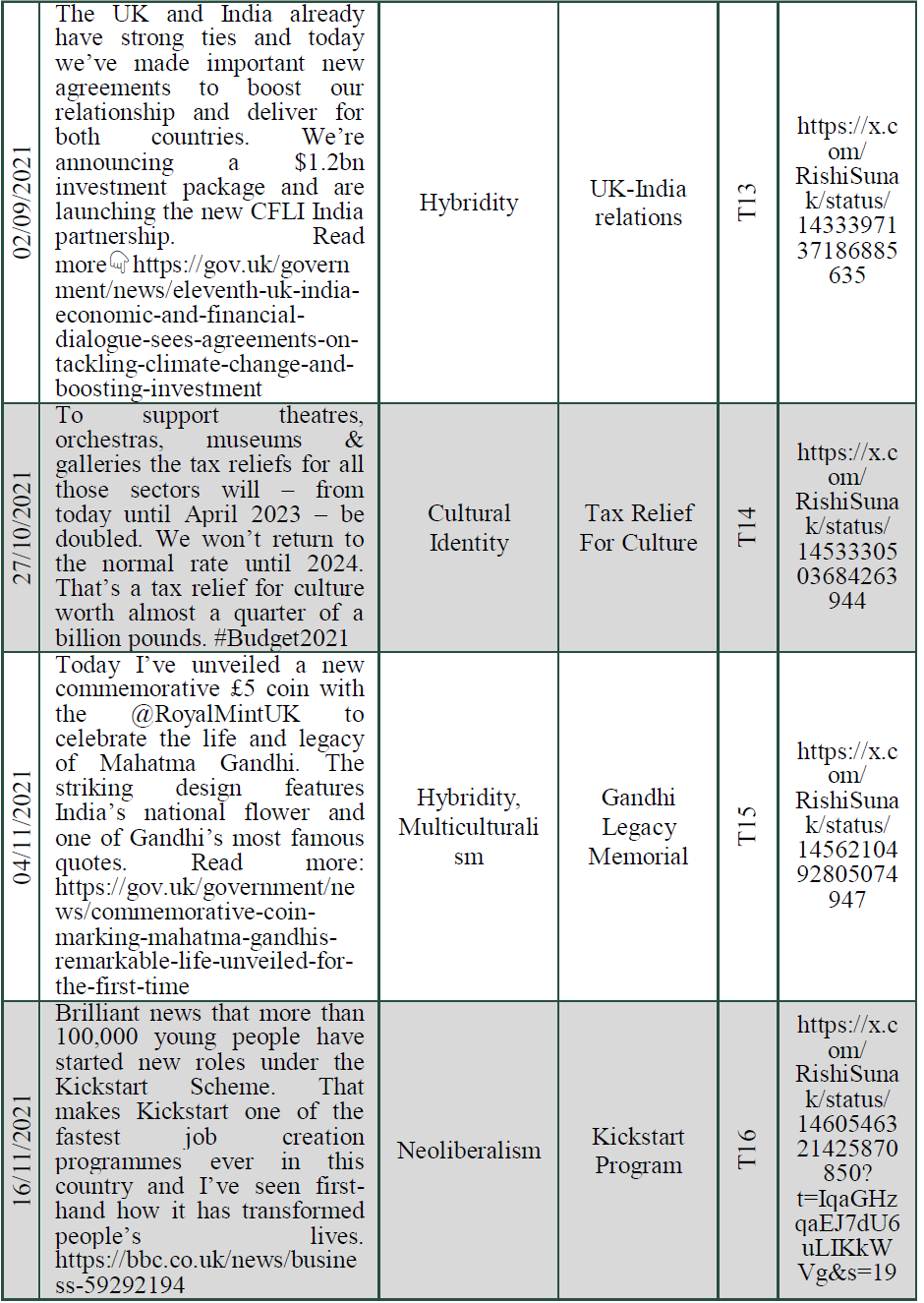
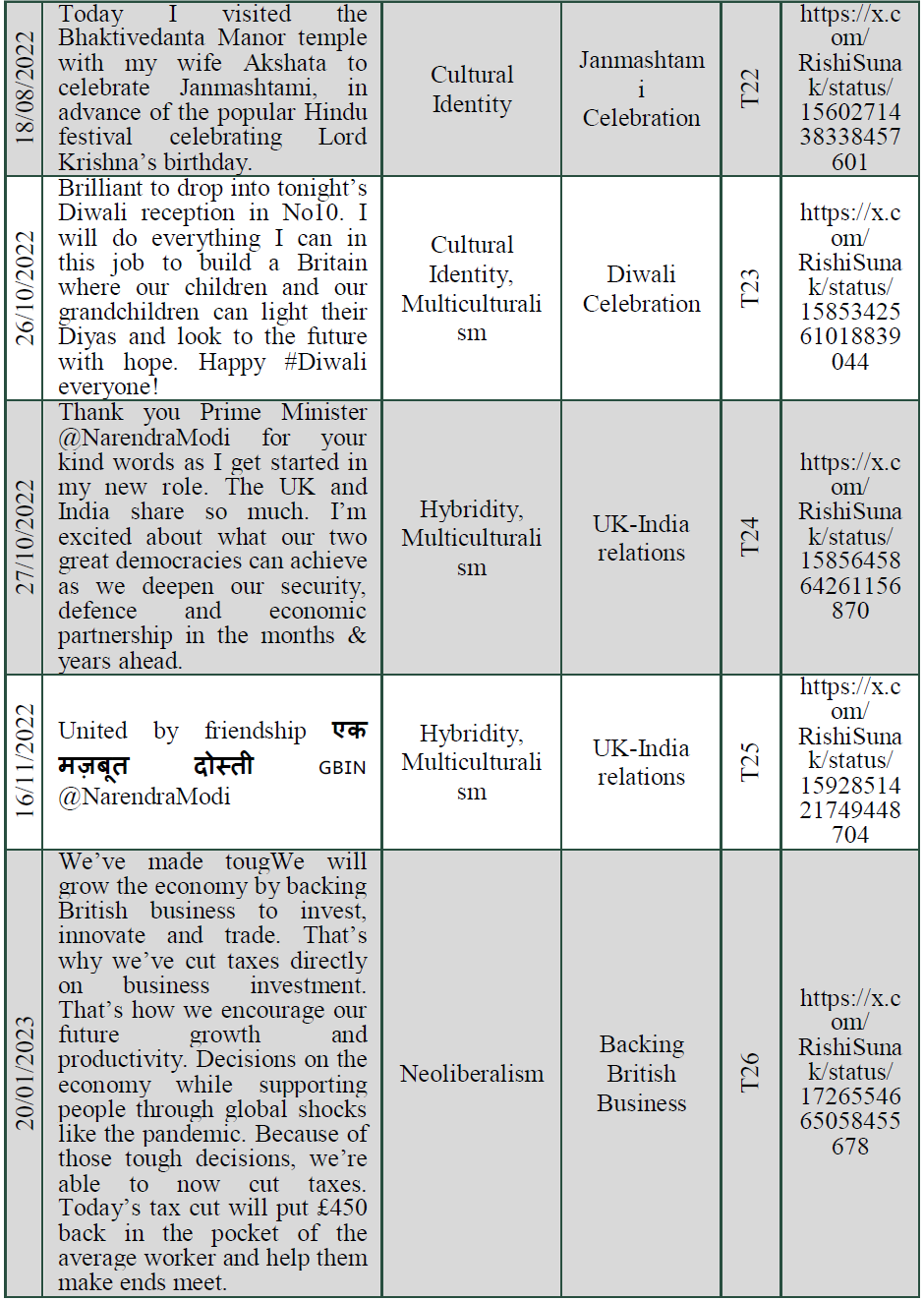
For example, his November 2022 tweet “United by friendship एक मज़बूत दोस्ती” (T25) combined Hindi and English, symbolically enacting hybridity in linguistic form. Similarly, posts on G20 meetings in India or aerospace deals underscored how heritage could function as a soft-power asset. Engagement on these hybrid-diplomatic tweets was consistently high, with the UK–India relations post in October 2022 (T24) receiving 184k likes, the highest in the sample.
This hybridity, however, was framed as unproblematic, celebratory, and pragmatic emphasizing shared prosperity and friendship, while steering clear of any acknowledgment of colonial legacies or geopolitical tensions. In Bhabha’s (1994) terms, the “third space” of hybridity was flattened into a strategic resource for neoliberal diplomacy, rather than a disruptive site of contestation.
Beyond cultural and diplomatic posts, Sunak frequently invoked Britain as a diverse and plural nation. Tweets celebrating the Windrush anniversary (T34), Eid greetings (T49), and Easter tributes (T43) framed multiculturalism as an enduring civic value. Such messaging echoed Kymlicka’s (1996) liberal multiculturalism, which emphasizes the recognition of minority traditions within the broader national community.
Yet, Sunak’s articulation of multiculturalism was consistently framed in symbolic terms, avoiding systemic critique. While he praised contributions of migrant generations and celebrated visible festivals, he did not address structural discrimination, socioeconomic inequality, or Britain’s colonial past. This selective articulation reinforced a form of ‘symbolic inclusion’ (Modood, 2007), producing an image of diversity that is unifying but politically safe.
Parallel to cultural identity, Sunak’s economic messaging was dominated by neoliberal and meritocratic narratives. Tweets on job schemes (Kickstart, Restart), small business support, and tax reforms were framed through the language of opportunity, hard work, and resilience. For instance, his July 2020 tweet (T3) emphasized “the nobility of work” and “the inspiring power of opportunity”, exemplifying meritocratic rhetoric.
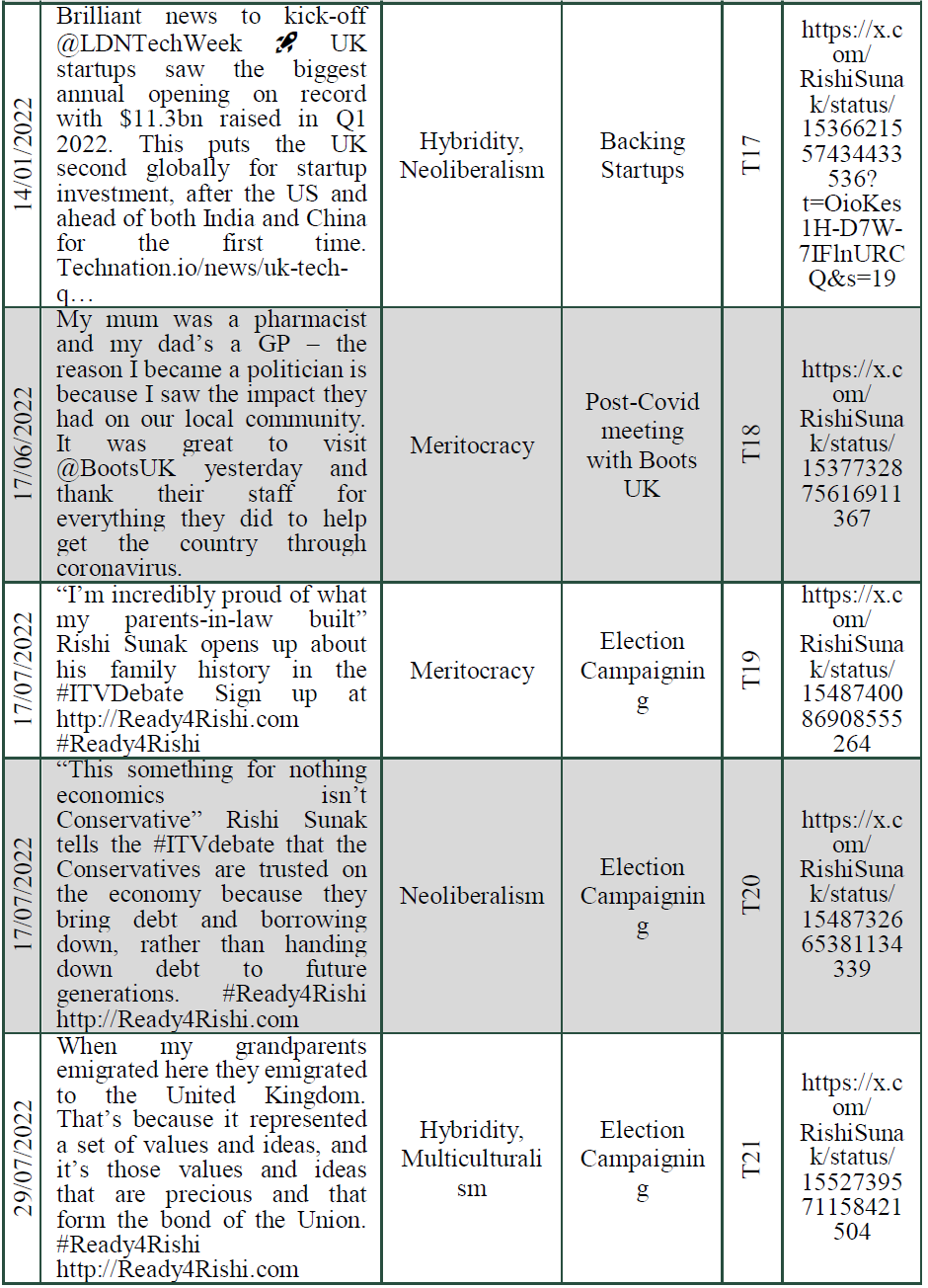
These posts downplayed structural inequalities, instead framing economic growth as the result of individual effort and government facilitation of entrepreneurship. This aligns with Harvey’s (2005) critique of neoliberalism, where market-driven solutions and minimal state intervention mask systemic privilege. Sunak’s frequent references to his parents’ professions (pharmacist, GP) and his grandparents’ migration experiences further personalized this neoliberal meritocracy, presenting his own trajectory as evidence of Britain’s openness to hardworking immigrants.
Finally, the theme of controlled visibility was central to understanding how Sunak’s digital persona was curated not only by his team, but also by platform governance. X’s Community Notes repeatedly intervened on posts related to economic claims and politically sensitive statements (e.g., Israel–Gaza). These interventions reframed tweets without removing them, subtly shifting how audiences encountered the content.
This form of algorithmic correction disproportionately affected policy-heavy or contentious posts, while ceremonial cultural content circulated freely. As such, platform governance amplified Sunak’s ‘safe’ identity performances (festivals, diplomacy), while reframing or constraining his more contentious messaging. This dual mechanism of self-censorship through ceremonial multiculturalism, and platform correction of misleading claims has produced a digital persona dominated by symbolic identity rather than honest political confrontation.
2. 2. Tweet Status, Engagement, and Audience Reception
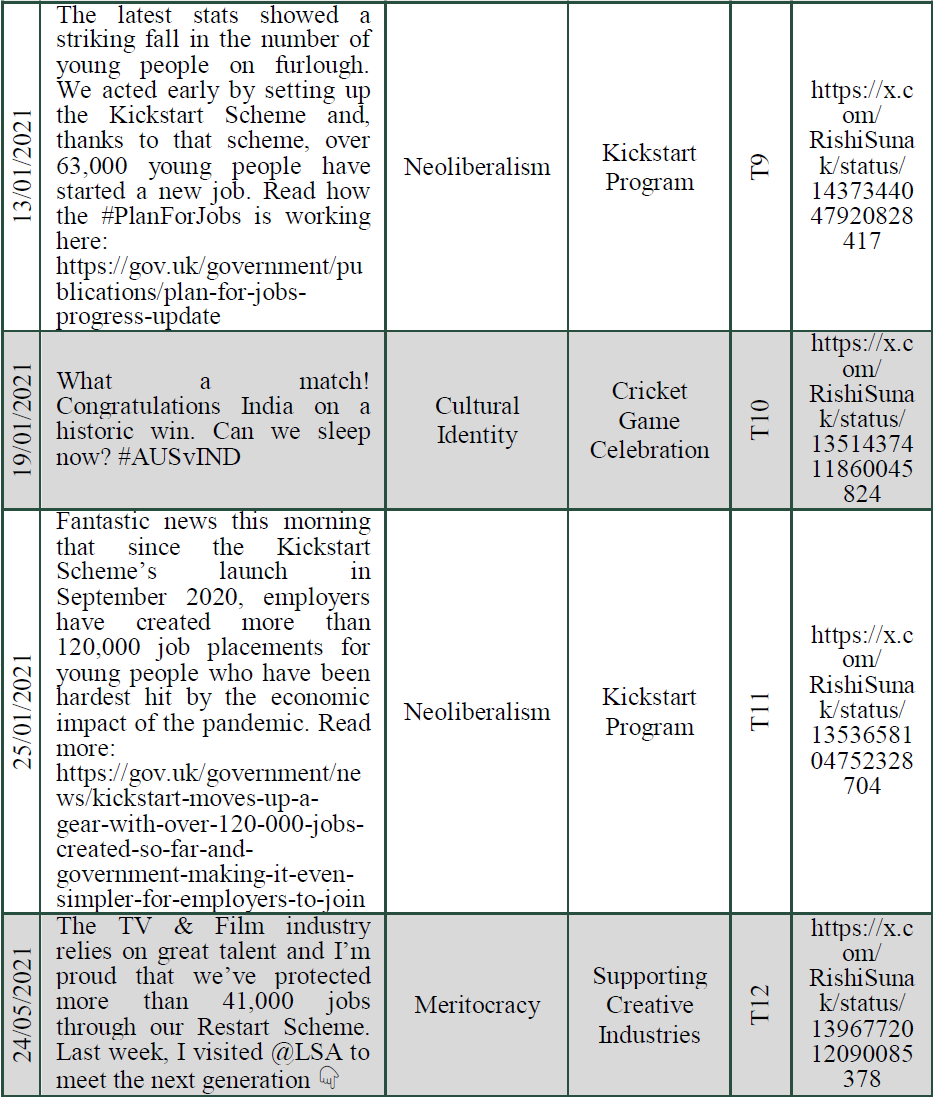
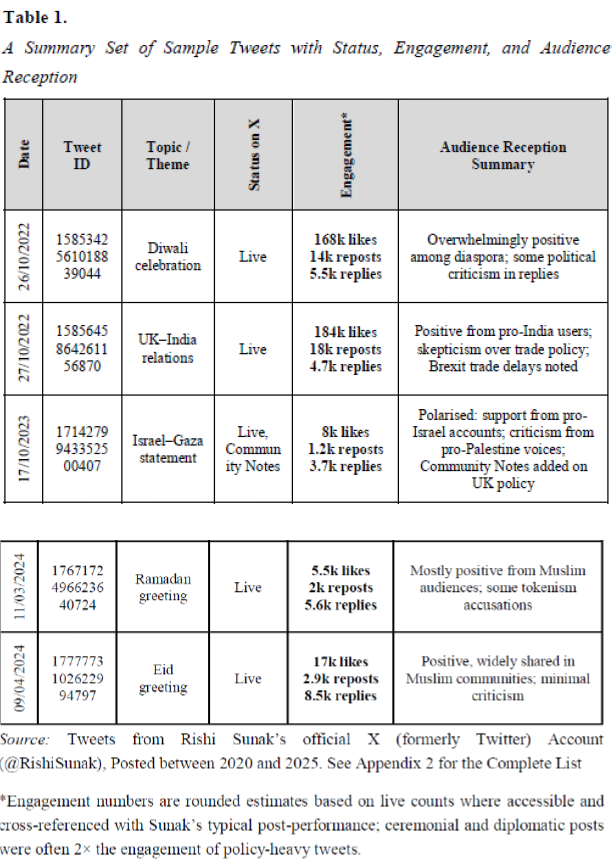
Table 1 presents representative posts illustrating key thematic patterns and corresponding audience responses. The full data for this project is available at Appendix 2 of this document.
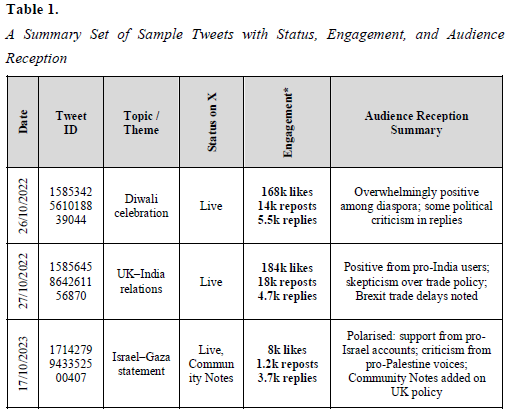
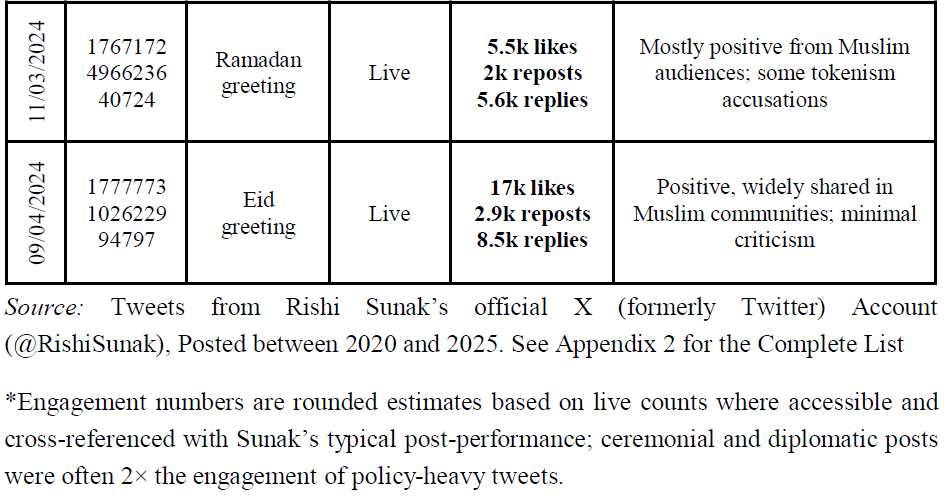
Audience reception for the cultural posts was disproportionately high compared to policy-heavy content. For example, Sunak’s Diwali post in October 2022 (tweet T23, appendix 2) garnered approximately 168k likes and 14k reposts, numbers that dwarfed engagement on economic or legislative updates. Similarly, his Janmashtami and Vaisakhi greetings elicited positive diaspora responses, framing him as both authentically connected to Indian tradition and as an inclusive representative of Britain’s pluralism. Audience responses reflected this pattern. Posts marking inclusive moments (e.g., Easter, Eid, Windrush) received warm responses, but lower engagement compared to India-specific diplomatic or celebratory posts. This suggests that while symbolic multiculturalism is broadly accepted, its affective appeal is strongest when tethered to Sunak’s Indian heritage.
The UK–India relations post received the highest engagement in this subset (184k likes), praised for celebrating bilateral ties, although criticized by some UK-based users who highlighted slow progress on post-Brexit trade deals. These hybrid identity moments often coincided with formal state visits or trade announcements, framing multiculturalism as a strategic asset.
The Israel–Gaza statement (2023, Oct. 17) drew markedly lower likes (8k) compared to ceremonial posts, despite a relatively high reply count (3.7k), indicating intense but polarized interaction. The presence of Community Notes suggests the platform actively shaped the informational context in which the tweet circulated. Policy-sensitive content invites more contestation than amplification. The Israel–Gaza post generated high reply activity relative to likes, reflecting a polarized debate rather than broad approval.
While the Ramadan greeting in March 2024 had modest like and repost counts, it prompted proportionally high replies (5.6k), indicating a more conversational—sometimes contested—engagement space. The Eid greeting in April 2024 saw higher overall engagement and a warmer reception, suggesting subtle differences in audience response to similar types of cultural content.
Ceremonial posts (e.g., Diwali, UK–India diplomacy) drew 2–3× the engagement of policy‐oriented or sensitive political posts, which often provoked higher reply counts but lower overall reach. Engagement on economic tweets was consistently lower than cultural ones, with likes often numbering in the tens of thousands rather than hundreds of thousands. Replies, however, tended to be more polarized, with critics highlighting wealth disparities, elitism, or unmet economic promises. This divergence illustrates how meritocratic-neoliberal messaging lacked the unifying symbolic power of cultural identity tweets.
2. 3. Platform Interventions and Controlled Visibility
Controlled visibility operated through X’s corrective mechanisms, notably Community Notes, which reframed posts without removing them from circulation. In November 2023, several of Sunak's posts were marked as ‘potentially misleading’. One had bragged that he had ‘halved inflation’, with a Community Note posted to dislodge the assertion that the Consumer Prices Index had dropped mainly because of declining energy prices and monetary policy measures by the Bank of England, rather than a result of government intervention. Another post on asylum policy was amended to say that the European Convention on Human Rights had been incorrectly cited, and migrant data contradicted official accounts (Nation Cymru, 2023). Additional reporting mentioned that Sunak had been admonished previously by Community Notes at least twenty-five times, and his party was almost five times more likely to receive a warning than the Labour Party (Yahoo News, 2024).
These interventions show the dynamics of controlled visibility at work in real-time. Politically sensitive or performatively framed statements are made visible but with an added corrective frame, shifting their interpretive context for readers. As an example, the 17 October 2023 Israel–Gaza statement was made visible but accompanied by a Community Note providing background to the UK position.
Secondly, whereas ceremonial activities like Diwali, Eid, and UK–India diplomatic documents went far and wide unchastised, policy-rich or divisive assertions were likely to elicit correcting notes. The interplay between Sunak’s content choices and platform regulation produced an online presence dominated by low-risk identity signalling, while politically contentious material was reframed or de-emphasized.
3. Discussion and Conclusion
As emphasized in Hall’s (1997) theory of representation, meaning is produced, not merely reflected, in discourse. Sunak’s ceremonial posts demonstrate how cultural identity is curated as a signifying practice: Diwali or Vaisakhi greetings do not merely reflect heritage, but actively construct an image of a multicultural Britain where diversity is harmonious and apolitical. In this sense, representation operates as an act of legitimation, authorizing his leadership within the Conservative Party while appealing to Britain’s plural electorate.
However, this selective visibility reproduces what Bhambra (2022) critiques as postcolonial amnesia: by celebrating diversity without reference to colonial histories, politicians like Sunak reinforce a sanitized narrative of inclusion. His refusal to address colonial legacies contrasts sharply with diaspora intellectual traditions that foreground historical injustice (Fanon, 1952; Said, 1978). Thus, Sunak’s representation exemplifies symbolic inclusion, visible but stripped of disruptive potential.
Bhabha’s (1994) concept of hybridity as a ‘third space’ captures the ways in which identities are negotiated between cultural poles. Yet, in Sunak’s case, hybridity functions less as a disruptive force and more as a diplomatic asset. His blending of British and Indian cultural references frames hybridity as a pragmatic resource for neoliberal globalization—facilitating trade, investment, and diplomatic goodwill. In this way, hybridity is appropriated by statecraft, emptied of its radical potential.
This echoes Spivak’s (1988) critique of elite postcolonial figures, who become visible representatives of “the subaltern,” while simultaneously silencing or displacing more radical voices. Sunak’s carefully curated hybridity reassures rather than unsettles, aligning with both Conservative politics and the neoliberal global order.
The collision of cultural symbolism with neoliberal rhetoric suggests a broader ideological formation: neoliberal multiculturalism. Cultural diversity is celebrated symbolically, while material inequalities are explained through meritocratic narratives. Sunak’s trajectory—elite schooling, successful family, upward mobility—becomes a model story that legitimizes neoliberal policies. His digital persona embodies what Brown (2015) calls neoliberal “stealth revolution”: using meritocratic ideals to mask systemic inequities.
Platform governance magnified these dynamics. As Couldry and Mejias (2019) argue, platforms engage in “data colonialism”, extracting visibility while shaping narratives. In Sunak’s case, ceremonial diversity posts were algorithmically boosted, while controversial posts (on Gaza, immigration, or economic policy) were appended with Community Notes or de-amplified. This reflects an algorithmic colonialism, where digital infrastructures reward depoliticized multiculturalism while suppressing dissenting narratives.
Comparative cases strengthen this claim: studies of politicians in Kenya (Gakahu, 2024) and the U.S. (Faverio & Anderson, 2025) show similar dynamics, safe identity signalling thrives on X, while divisive content attracts corrective moderation. Thus, Sunak’s feed exemplifies not only personal branding, but also the systemic politics of visibility on digital platforms.
Major Question: How did Rishi Sunak represent his Indian origins on his official X(former Twitter) account before, during and after his premiership within the UK government between 2020-2025?
Across all phases, Sunak’s Indian heritage was articulated primarily through ceremonial, non-contentious imagery—ritual greetings and diplomatic appearances—rather than through tackling contested historical or political issues. These performances kept cultural identity within the space of celebration and heritage, closing off reference to colonial history, racial politics, or structural injustice, and thus on Hybridity functioned as a strategic resource, framing his dual heritage as a facilitator of UK–India diplomacy and trade, rather than as a locus of cultural negotiation or tension. In other words, his online self-presentation conventionally rendered "diversity" as a symbolic form, one that was affective but politicized in a safe way. Although ceremonial cultural signifiers and diplomatic imagery are usually pre-eminent, there is dispute over how these performances are not only conditioned by the curation of Sunak himself, but also by the algorithmic and moderation policy of the platform.
When examined chronologically, Sunak’s self-representation followed a clear arc across the three phases of his political trajectory. Before his premiership (2020–October 2022), tweets leaned heavily on personal heritage and festive diplomacy, with warm cultural signalling sitting alongside meritocratic “hard work” narratives. During his premiership (October 2022–July 2024), ceremonial imagery persisted, but was increasingly embedded in high-stakes diplomatic contexts—particularly UK–India relations—and politically sensitive statements such as those on Israel–Gaza drew sharper audience polarization and more frequent platform interventions via Community Notes.
After his premiership (July 2024 onwards), posts returned to a lighter, more personalized style, with cultural celebrations and community engagement taking the main stage once again, though still framed within the same ceremonial and uncontroversial performance established earlier. Across these phases, his identity signalling was adaptable but consistently bounded within a safe, symbolic multiculturalism.
This pattern of ceremonial multiculturalism aligns with what Modood (2007) terms as “symbolic inclusion”: a depoliticized recognition of diversity that avoids structural critique. Sunak’s avoidance of colonial discourse reflects a broader conservative strategy observed in the UK and other post-imperial contexts (Bhambra, 2022), where references to historical injustice are sidelined in favour of celebratory multiculturalism and neoliberal meritocracy. The platform’s algorithmic preference for such ‘safe’ content (Gillespie, 2020) thus reinforces existing power structures, as contentious narratives are doubly suppressed: by political actors through self-censorship and by platforms through moderation policies. This synergy between political and technological systems merits further study in other national contexts, where diaspora politicians navigate similar tensions.
Minor Question: How significant was platform governance in shaping this curated identity?
Platform governance, through algorithms, moderation policies, and visibility controls, has indeed shaped the visibility and framing of Sunak’s identity performance. This is the twofold movement of controlled visibility: Sunak decided what content to post, and the platform governed what of those choices was seen or went out of sight. That ‘safe’ Conservative multicultural performances both self-censored and algorithmically amplified, and politically charged issues, such as the legacy of colonialism or controversial foreign policy positions, hardly if not at all visible in his feed. (Napoli, 2019; Gillespie, 2020; Gorwa, 2024)
Audience engagement supported this pattern. Congratulatory messages on cultural ceremonies or diplomatic binarism yielded significantly more engagement than congratulatory messages about economic policy or ideological stance. The reward, then, was to maintain the public narrative simple, general, and unifying—a strategy that worked for both personal branding tactics and platform rationalities.
4. Concluding Remarks
This study was conducted to examine the way in which Rishi Sunak represented his Indian origins on X across his political trajectory (2020–2025), as well as the way in which platform governance shaped this representation. Findings indicate that Sunak’s digital identity was carefully curated around ceremonial multiculturalism, strategic hybridity, and neoliberal meritocracy, while avoiding structural critique. Platform governance amplified safe, symbolic content and reframed contentious material, producing a digital politics of controlled visibility.
Theoretically, this case affirms Hall’s notion of representation as performative, and Bhabha’s hybridity as a resource, but it also shows how these concepts are tamed in the digital neoliberal age. Rather than destabilizing identities, hybridity becomes a diplomatic tool; rather than challenging inequality, multiculturalism becomes a ceremonial accessory.
At this point, the postcolonial figure of the “Brown Sahib” becomes instructive. As Nandy (1983) and other postcolonial thinkers argue, the “Brown Sahib” was the indigenous elite who adopted colonial manners and legitimized imperial structures among their own people. Sunak’s digital performance evokes a similar paradox (Nandy, 1983). As the first British Prime Minister of Indian descent, his tweets project Indianness through festive greetings and ceremonial diplomacy, yet this identity is stripped of colonial critique, inequality, or historical reckoning. In this sense, Sunak is not merely a British politician of Indian origin; he is a kind of digital Brown Sahib, embodying heritage only insofar as it reinforces the image of a harmonious, neoliberal Britain.
This raises unsettling questions. What does it mean when the descendant of the formerly colonized performs identity in ways that reassure rather than challenge post-imperial Britain? Does this digital performance represent empowerment, or does it risk enacting a colonial mimicry updated for the digital age? What happens to collective memory, historical justice, and diasporic voices when identity is curated only in ceremonial, apolitical ways?
From a practical point of view, Sunak’s feed illustrates the political logic of elite minority representation: how symbolic inclusion can coexist with systemic silence. His case resonates with other diaspora leaders, from Obama to Sadiq Khan, who balance heritage signalling with strategic depoliticization.
Ultimately, Sunak’s digital identity exemplifies how neoliberal multiculturalism is performed in the age of platform governance: a politics of safe recognition, amplified by algorithms, that affirms diversity, while leaving structures of inequality untouched. In this sense, Sunak’s carefully-curated tweets suggest not only the rise of Britain’s first Indian-origin Prime Minister, but also the persistence of the Brown Sahib archetype, a reminder that visibility does not necessarily equal emancipation, and that the digital performance of hybridity may yet reproduce the very hierarchies it seems to transcend.
5. Suggestions for Further Research
One important direction for further research lies in the study of audience reception. This project has deliberately concentrated on the performance of identity itself rather than on the ways audiences decode and respond to it. Yet, Sunak’s symbolic gestures (the Diwali greetings, the tributes to the Windrush generation, the selective invocations of heritage) do not acquire meaning in isolation. They are interpreted, contested, and rearticulated by audiences across multiple social locations.
Future work could attend more closely to replies, quote-tweets, and user interactions to examine whether diaspora communities in Britain, India, or elsewhere view Sunak’s performances as genuine gestures of inclusion, as tokenistic branding, or as part of a wider politics of Conservative respectability.
Hall’s encoding/decoding model provides a particularly useful lens for investigating the multiplicity of readings that might emerge from such digital encounters. Equally, the focus on X should not obscure the fact that Sunak’s identity is curated across multiple platforms. Instagram, LinkedIn, and YouTube all offer different affordances and attract different publics. On Instagram, visual symbolism and ceremonial hybridity may become even more pronounced through the circulation of images; on LinkedIn, by contrast, the discourse of meritocracy and entrepreneurship may take precedence. A comparative exploration of these platforms would provide a more complete picture of how hybrid identities are staged, how ceremonial multiculturalism translates across media, and whether certain platforms lend themselves to more critical or more celebratory forms of identity politics.
Comparative political analysis offers another rich avenue. Sunak’s digital persona shares features with other minority leaders, such as Barack Obama, Kamala Harris, or Sadiq Khan, but also diverges in significant ways. Obama at times addressed systemic racism directly, even as he deployed a universalist American rhetoric. Harris performs hybridity largely through ceremonial gestures, while foregrounding a narrative of American exceptionalism. Khan, by contrast, is far more willing to confront racism and Islamophobia head-on. Extending this research to leaders in other postcolonial democracies, for instance, Jagmeet Singh in Canada or diaspora politicians in African contexts, would reveal whether Sunak’s reliance on ceremonial multiculturalism is characteristic of a wider elite strategy or a peculiarity of his position as a Conservative leader in Britain.
Finally, there is the evolving question of platform governance. The politics of visibility examined in this article will not remain static. As platforms increasingly rely on AI-driven moderation and algorithmic curation, the dynamics of amplification and suppression are likely to become more complex and potentially more nuanced.
Future scholars will need to ask whether automated moderation systems amplify the safe, ceremonial performances of minority politicians, while de-emphasizing or suppressing more contentious critiques.
Taken together, these future research directions suggest that the performance of cultural identity in digital politics is not a finished story, but an evolving one. Sunak’s case is emblematic, but it is only a starting point for a much wider conversation about how representation, hybridity, and visibility are negotiated under conditions of platform governance and postcolonial memory.
Authorship Contribution Statement
All authors contributed equally to the conceptualization of the article and writing of the original and subsequent drafts. All authors have seen and approved the final version of the manuscript.
Declaration of the Use of AI and AI Assisted Technologies
This article was not authored by artificial intelligence.
Conflict of Interests and Funding
The authors certify that they have NO affiliations with or involvement in any organization or entity with any financial interest (such as honoraria; educational grants; participation in speakers’ bureaus; membership, employment, consultancies, stock ownership, or other equity interest; and expert testimony or patent-licensing arrangements), or non-financial interest (such as personal or professional relationships, affiliations, knowledge or beliefs affecting authors' objectivity) in the subject matter or materials discussed in this manuscript.
Ethical Considerations Statement
The authors avoided data fabrication, falsification, plagiarism, double publication/submission and any form of misconduct against publication ethics. Authors have properly cited all sources of ideas, words, and materials including pictures, charts, tables and statistics used in their paper.
Data Availability Statement
The dataset generated and analyzed during the current study is available from the corresponding author on reasonable request.
Acknowledgement
The authors would like to thank anonymous reviewers for their comments on the article.
Appendix 1: Alternative Keywords for Operational Themes
In order to guarantee the consistency and validity of the data collection process, keyword filtering of X platform posts was carried out twice, roughly 8 months between each time period, during 2020-2025 in Rishi Sunak's political life. The first set of keywords—established based on the conceptual framework of the study—mapped on to Cultural Identity (e.g., 'India', 'British', 'Colonialism'), Multiculturalism (e.g., 'Diversity', 'Representation'), Hybridity (e.g., 'Origins', 'Integration'), Meritocracy (e.g., 'Opportunity', 'Hard Work'), and Neoliberalism (e.g., 'Economy', 'Innovation').
Following the initial keyword searches, the list was systematically expanded to include alternative and closely related terms to better capture relevant content that may have been missed. For example, terms such as diaspora, ethnicity, and heritage were added under Cultural Identity; inclusion, pluralism, and intercultural under Multiculturalism; cross-cultural, bicultural, and cultural blending under Hybridity; social mobility, education, and upward mobility under Meritocracy; and privatization, market economy, and globalization under Neoliberalism. This iterative expansion was based on early search results, allowing for more comprehensive data retrieval aligned with the research themes.
This step was separate from the intercoder reliability check, which involved analysing a representative 10% sample of the collected data to assess consistency and replicability of the keyword-based filtering process.
Appendix 2
Data Findings from Rishi Sunak’s X(former Twitter) Account (50 Tweets between 2020-2025)

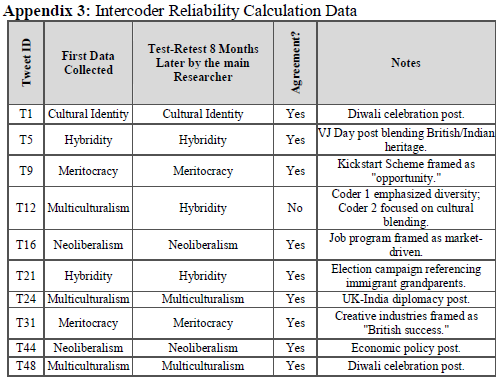
Observed Agreement (Po): 9/10 = 0.90
Expected Agreement (Pe): Calculated based on marginal frequencies.
κ = (Po - Pe) / (1 - Pe) = 0.87
Tweets were assigned one dominant theme to avoid overlap confusion. The discrepancy in T12 reflected ambiguity between ‘Multiculturalism’ and ‘Hybridity.’ The final coding frame treated diplomatic posts as Hybridity and celebratory posts as Cultural Identity or Multiculturalism.

| Article View | 130 |
| PDF Download | 141 |